
Key takeaways
- What Is Inside the Ksh 177.2B Health Allocation?
- SHA Is the System Test
- Primary Healthcare Fund: The Front Door of UHC
- Community Health Promoters: Small Stipends, Big Responsibility
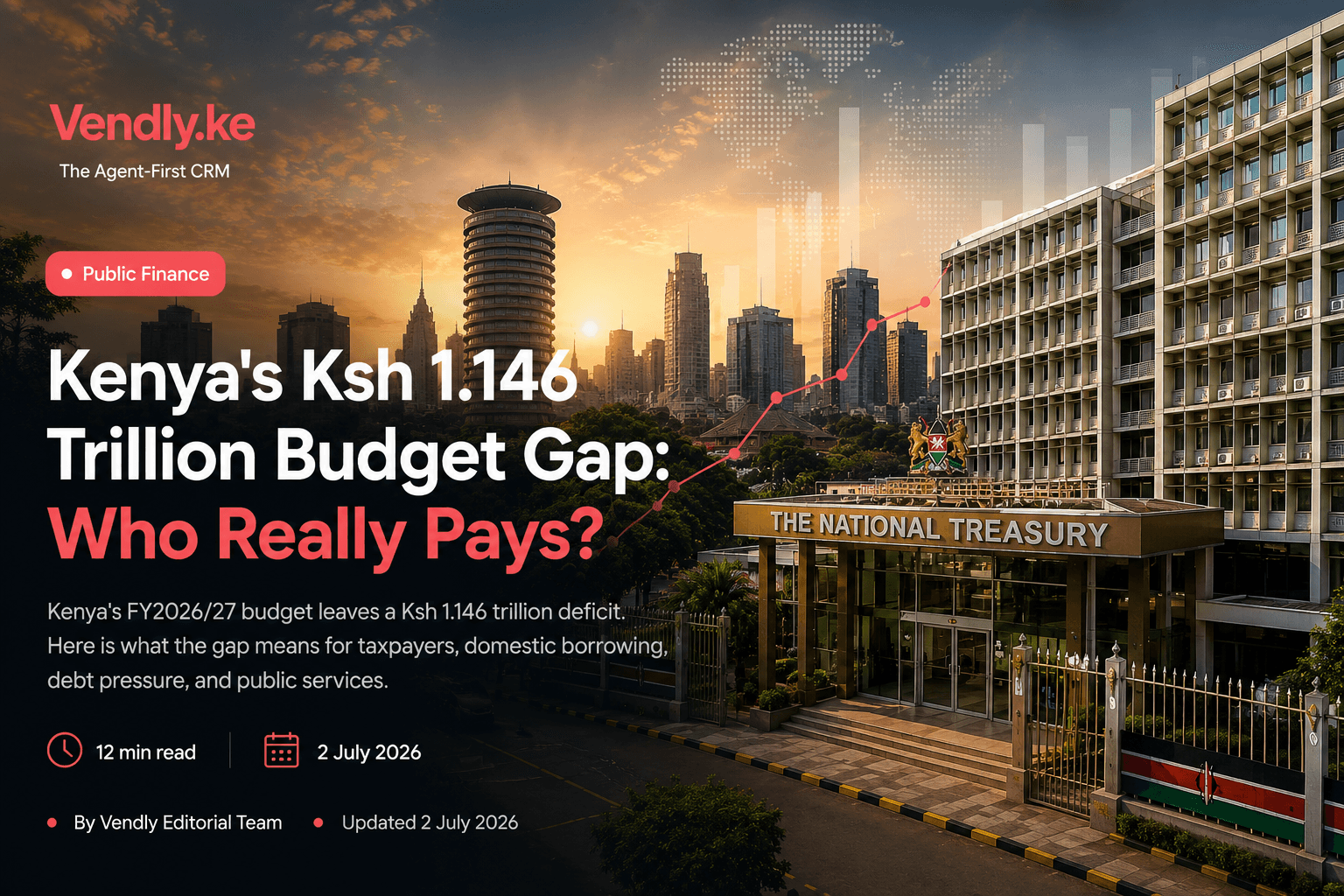
Kenya's FY2026/27 budget gives health Ksh 177.2 billion. On paper, that is one of the most important allocations in the whole budget because healthcare is the public service that can bankrupt a household faster than almost anything else.
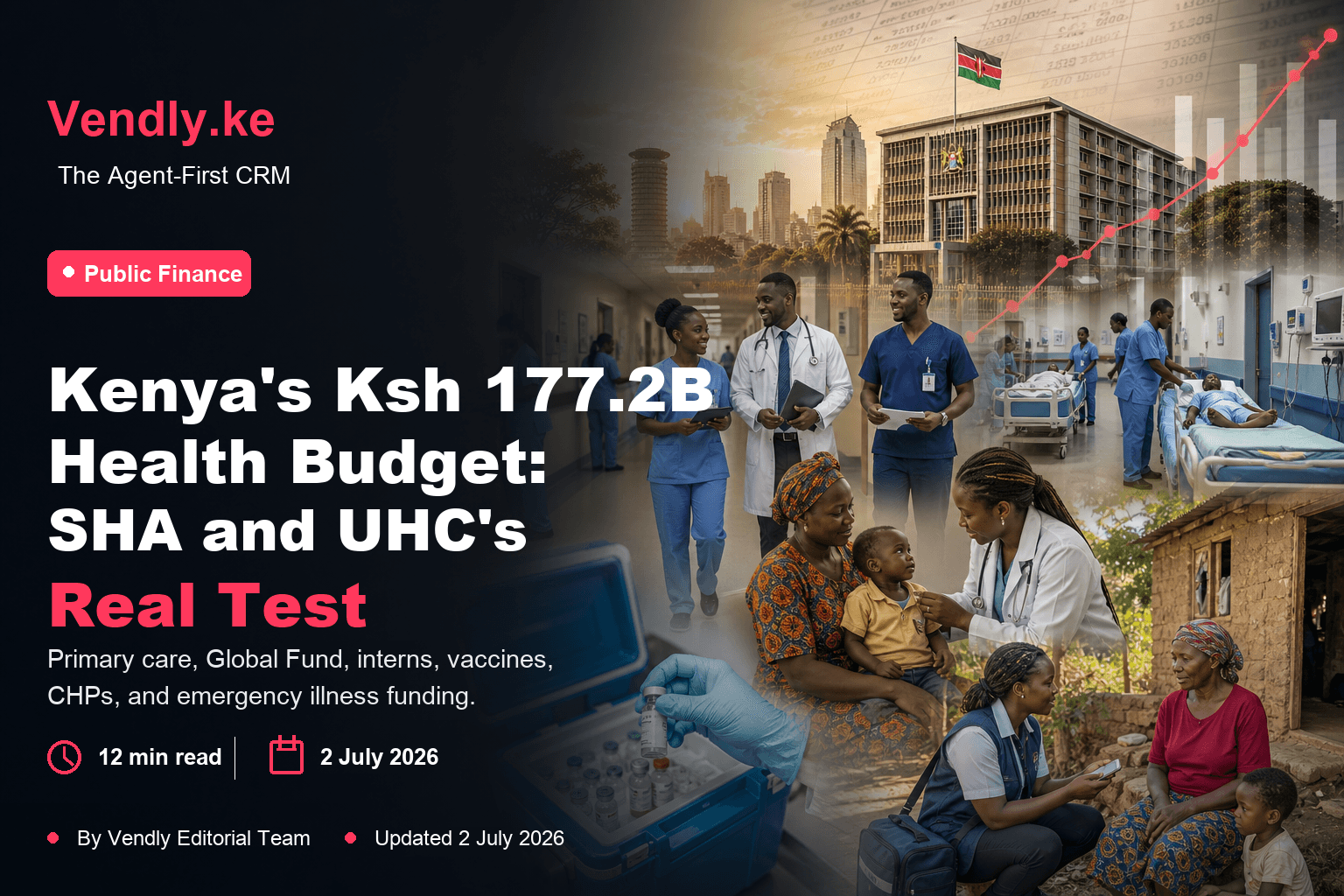
The allocation sits inside the government's Universal Health Coverage promise and the ongoing shift from the old NHIF model to the Social Health Authority system. The budget names the Primary Healthcare Fund, Global Fund support for HIV, malaria and TB, health interns, UHC health workers, vaccines, Community Health Promoters, reproductive and maternal health, and emergency, chronic and critical illness funding.
The real health-budget test is not whether Kenya has budget lines for UHC. It is whether a patient can walk into a facility and find staff, medicines, vaccines, diagnostics, referral care, and a claims system that actually pays.
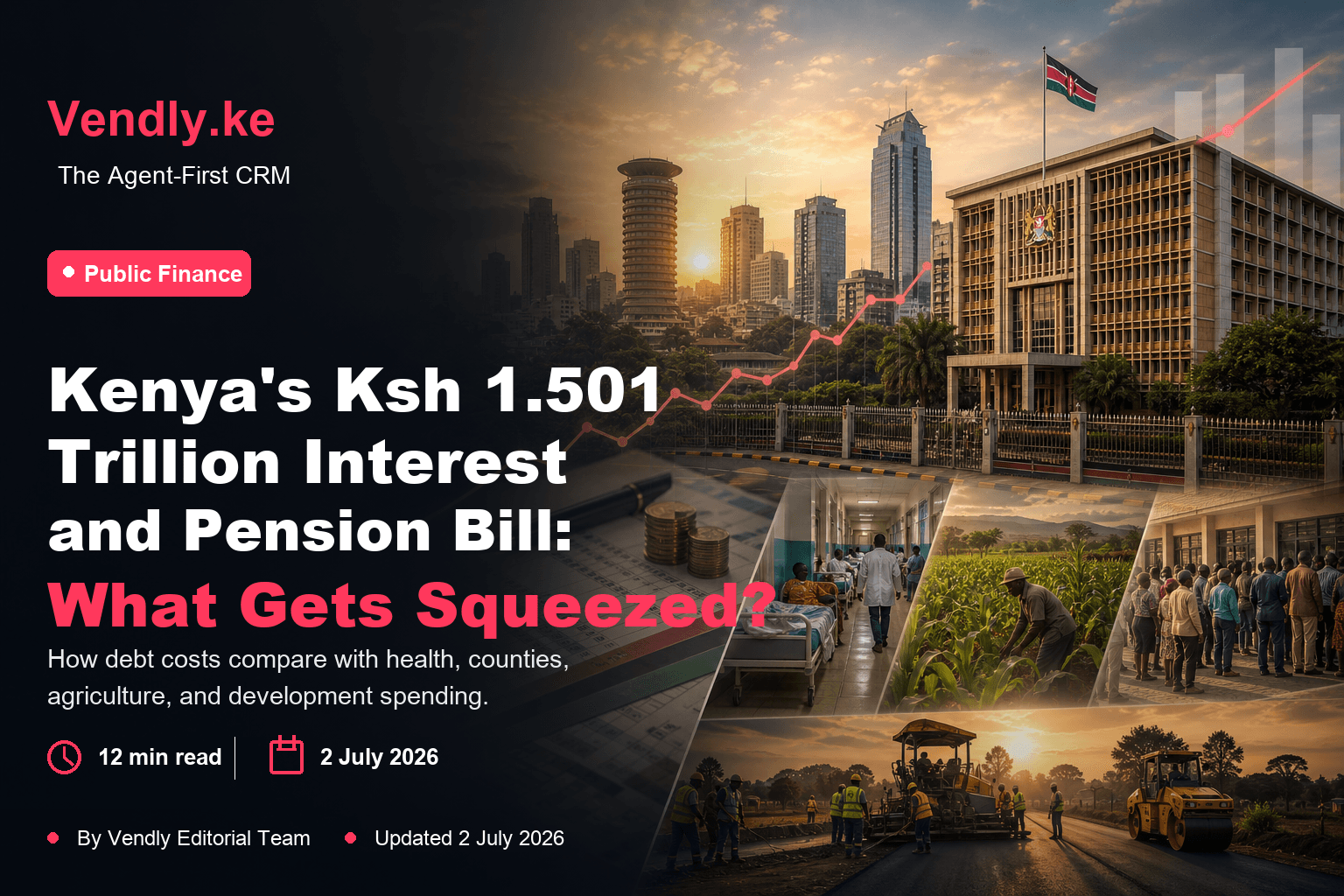
This is why the Ksh 177.2 billion figure should be read carefully. It is large enough to matter, but small compared with the pressure health facilities face. It is about 6.1% of national government ministerial allocations in the Mwananchi Guide. It is less than a quarter of education's Ksh 784.5 billion, and it is about one-eighth of the Ksh 1.5013 trillion line for interest payments, pensions, and related fixed obligations.
For a Kenyan family, that comparison is not theory. If public care works, a child gets vaccinated on time, a mother gets safe delivery care, a diabetic gets medicine before complications, and an emergency does not force a household into a fundraiser. If public care fails, the budget pressure moves directly to M-Pesa, chama loans, salary advances, harambees, and private chemists.
What Is Inside the Ksh 177.2B Health Allocation?
The Mwananchi Guide groups health under the public expenditure tracking figure of Ksh 177.2 billion. Its UHC section then lists the main health spending priorities. The Budget Summary gives more detail on some lines, especially SHA-related community health and emergency illness funding.
| Health item | FY2026/27 allocation | Why it matters |
|---|---|---|
| Health sector allocation | Ksh 177.2 billion | The national health allocation in public expenditure tracking |
| Primary Healthcare Fund | Ksh 19.1 billion | The front door of UHC, meant to support care before illness becomes expensive |
| Global Fund for HIV, malaria and TB | Ksh 18.5 billion | Protects disease programmes that many counties cannot carry alone |
| Health interns | Ksh 9.3 billion | Keeps the training and staffing pipeline moving |
| Universal Health Coverage | Ksh 8.6 billion | Supports UHC implementation and health-worker related commitments |
| Vaccines Programme | Ksh 6.4 billion | Prevention money that avoids bigger hospital costs later |
| Community Health Promoters | Ksh 3.6 billion | The household-level layer of primary healthcare |
| Emergency, chronic and critical illness funding | Ksh 3.0B to Ksh 4.0B in official documents | Protection against costly illness, with official budget documents showing different highlighted figures |
The variation on emergency, chronic and critical illness funding is worth noting. The Mwananchi Guide highlights Ksh 3.0 billion for the Emergency, Chronic and Critical Illness Fund, while the Budget Summary lists Ksh 4.0 billion. That is not a reason to ignore the line. It is a reason to watch the final implementation and actual releases closely.
SHA Is the System Test
The Social Health Authority is where the health budget becomes a systems test. SHA is not just a new name on a card. It is meant to run a financing structure where ordinary Kenyans can access primary care, insurance cover, and protection for emergency, chronic and critical illness without the old problem of waiting until a disease is too expensive to treat.
That promise is bigger than the budget line. It needs clean registration, accurate household data, clear benefits, hospitals that know what is covered, claims that are processed without games, and reimbursements that do not leave facilities broke. A system can have money and still fail if claims are slow, fraud is high, hospitals are underpaid, or patients cannot understand what they are entitled to.
For Kenyans who remember NHIF frustrations, this is where trust will be won or lost. A patient will not judge SHA by a policy document. They will judge it by whether a facility accepts them, whether the claim goes through, whether the medicine is available, and whether they still have to pay cash for what they thought was covered.
Primary Healthcare Fund: The Front Door of UHC
The Ksh 19.1 billion Primary Healthcare Fund allocation is one of the most important lines because it focuses on care before people need expensive hospital treatment. Primary healthcare is where immunisation, screening, maternal care, outpatient visits, basic diagnostics, referrals, family planning, nutrition support, and disease follow-up should begin.
If the Primary Healthcare Fund works, hospitals should face less avoidable pressure. A hypertensive patient should be monitored before a stroke. A child should get vaccines before preventable disease spreads. A pregnant mother should be followed before delivery becomes an emergency. A tuberculosis patient should be traced before treatment is interrupted.
But primary care only works when the basics are there. A dispensary cannot deliver UHC with no nurse, no medicine, no test kits, no transport for referrals, and no reliable data system. The fund must therefore be judged by what reaches facilities and households, not only by the amount printed in the budget.
Community Health Promoters: Small Stipends, Big Responsibility
Community Health Promoters get Ksh 3.6 billion in the Mwananchi Guide. The Budget Summary breaks this into Ksh 3.2349 billion for stipends and Ksh 396 million for medical insurance through SHA. These figures matter because CHPs are the closest part of the health system to ordinary households.
A good CHP can identify a pregnant mother who needs follow-up, encourage immunisation, support disease surveillance, refer a sick child, promote sanitation, and connect households to services before small problems become expensive emergencies. That is why the CHP line is not a side issue. It is one of the cheapest ways to make UHC visible outside hospitals.
The risk is overloading CHPs without proper support. They need timely stipends, working phones, training, supervision, reporting tools, referral pathways, and county cooperation. If they are treated as unpaid volunteers carrying a national promise, the programme will look good in speeches but weaken on the ground.
Health Interns and UHC Workers: Staffing Is Not Optional
The budget includes Ksh 9.3 billion for health interns and a UHC-related allocation in the Ksh 8.6 billion range. This is not just a labour issue. Staffing is the difference between a funded facility and a functioning facility.
Kenya has seen how quickly health services suffer when interns, doctors, nurses, clinical officers, pharmacists, lab staff, and other cadres are not deployed or paid on time. A hospital can have beds and equipment, but if the people who run the service are missing or demoralised, patients still wait.
This is also where national and county responsibilities meet. Health is heavily devolved, but national programmes shape training, referral hospitals, financing, interns, disease programmes, and UHC reforms. If the two levels of government do not coordinate, patients experience the gap as a queue, a referral delay, or a request to buy medicine outside.
Vaccines and Global Fund: Prevention Must Not Be Treated as Optional
The vaccines programme gets Ksh 6.4 billion in the Mwananchi Guide. The Global Fund line for HIV, malaria and TB is Ksh 18.5 billion. These are prevention and disease-control lines, and they matter because the cost of failure is much higher than the cost of prevention.
If vaccine financing is unreliable, Kenya risks stock-outs, missed schedules, and preventable outbreaks. If HIV, TB and malaria programmes are disrupted, the impact is not only medical. It affects families, productivity, school attendance, county hospitals, employers, and public confidence.
This is why health budgets should not be judged only by big hospital projects. A vaccine that prevents disease, a malaria intervention that keeps a worker productive, or a TB programme that prevents transmission can save more money than a late emergency response.
Emergency and Chronic Illness: Where Families Fear the Bill
The emergency, chronic and critical illness line is politically sensitive because it speaks to the illnesses families fear most: cancer, kidney disease, ICU care, major accidents, complicated surgery, and long-term conditions that drain household savings. This is the part of UHC where Kenyans expect protection from catastrophic spending.
A small outpatient bill is painful, but a chronic or emergency illness can break a family. It can force sale of land, business stock, livestock, motorbikes, or household assets. It can pull children from school or push a small business owner into debt. So even a few billion shillings in this fund carries a large public expectation.
The difficult question is whether the funding is enough for the demand. Chronic illness is rising, emergency care is expensive, and specialized treatment often sits in referral facilities that are already stretched. The fund must therefore be transparent: what is covered, who qualifies, how claims are approved, how hospitals are paid, and how patients appeal when cover fails.
The County Hospital Question
Health is where devolution is most visible. A national allocation can support UHC, referral systems and disease programmes, but many Kenyans experience healthcare through county facilities: dispensaries, health centres, sub-county hospitals and county referral hospitals.
That means the Ksh 177.2 billion health allocation cannot be separated from county cash flow. Counties receive a Ksh 428.0 billion equitable share plus other conditional allocations, and they carry frontline health responsibilities. If county disbursements delay, if pending bills grow, or if counties do not prioritise facility operations, patients still feel the pain even when national UHC funds exist.
This is the ordinary Kenyan experience: the budget says health has money, but the nurse says the drug is out of stock; the hospital says the machine is down; the supplier says the county has not paid; the patient is told to buy gloves, medicine or lab tests outside. That is why implementation matters more than the headline.
What SMEs Should Watch
The health budget is also a business issue. Pharmacies, private clinics, laboratories, suppliers of medical consumables, food vendors, cleaning firms, transport providers, software vendors, and equipment-maintenance businesses all sit around the health system.
If SHA claims are slow, private providers and pharmacies may face cash-flow pressure. If county hospitals delay payments, suppliers carry receivables. If public facilities lack medicine, households spend more in private chemists, reducing disposable income for other businesses. If disease prevention works, workers miss fewer days and household spending becomes more stable.
| Health-budget pressure | How it reaches businesses | What to monitor |
|---|---|---|
| Slow claims and reimbursements | Providers wait longer for SHA or public payments | Receivables, ageing reports, claim status and approval documents |
| County pending bills | Suppliers finance health facilities with their own working capital | Signed delivery notes, LPOs, payment timelines and cash reserves |
| Medicine stock-outs | Households shift spending to private chemists | Retail demand, credit sales, and essential medicine inventory |
| Disease-prevention performance | Better public health reduces absenteeism and emergency spending | Staff sick days, insurance claims, and community disease trends |
What Kenyans Should Watch During FY2026/27
The health allocation is meaningful, but UHC will be judged through daily experience. Kenyans should watch whether the Primary Healthcare Fund is visible in facilities, whether CHPs are paid and supported, whether vaccine supply is stable, whether interns are deployed, and whether SHA claims move without trapping patients or providers.
- 1Primary care access: Facilities should have staff, basic medicines, test kits and clear referral pathways.
- 2SHA registration and benefits: Kenyans need to know what is covered before they reach the hospital counter.
- 3Claims payment timelines: Hospitals and providers must be paid fast enough to keep services running.
- 4Vaccine availability: Prevention fails quickly when supply chains break.
- 5CHP stipends and tools: Community health cannot run on goodwill alone.
- 6Intern deployment: Training and staffing promises should translate into actual workers in facilities.
- 7County disbursements and pending bills: Late money at county level can weaken national health promises.
The Bottom Line
Kenya's Ksh 177.2 billion health budget is a serious UHC commitment, but it is not large enough to survive weak implementation. The money must travel from Treasury language to the patient experience: registration, triage, medicine, diagnosis, referral, claim approval and follow-up.
The SHA and UHC test is not whether every line item sounds right. It is whether public money reduces the moment of fear when a Kenyan becomes sick and wonders whether care will be available, affordable and paid for.
For households, the practical question is simple: will this budget reduce out-of-pocket spending? For businesses, the question is whether the health system pays suppliers and providers on time. For counties, the question is whether frontline facilities can turn national promises into reliable care. That is where the FY2026/27 health budget will either earn trust or lose it.